Agent delivery
Loopcraft
Delivery tracking that coding agents keep current and a person approves.
What it does
Every piece of work starts as a brief: the goal, what done looks like, the context, the constraints and what is out of scope. A coding agent takes the item, writes the plan, and waits. A person approves the plan before a line of code changes.
From then on the agent keeps the record itself, through MCP and a REST API: each step as it starts and finishes, the evidence behind it, the questions only a person can answer, and a report when it pauses or finishes. A question blocks the item until someone answers it. An item marked done without evidence is flagged.
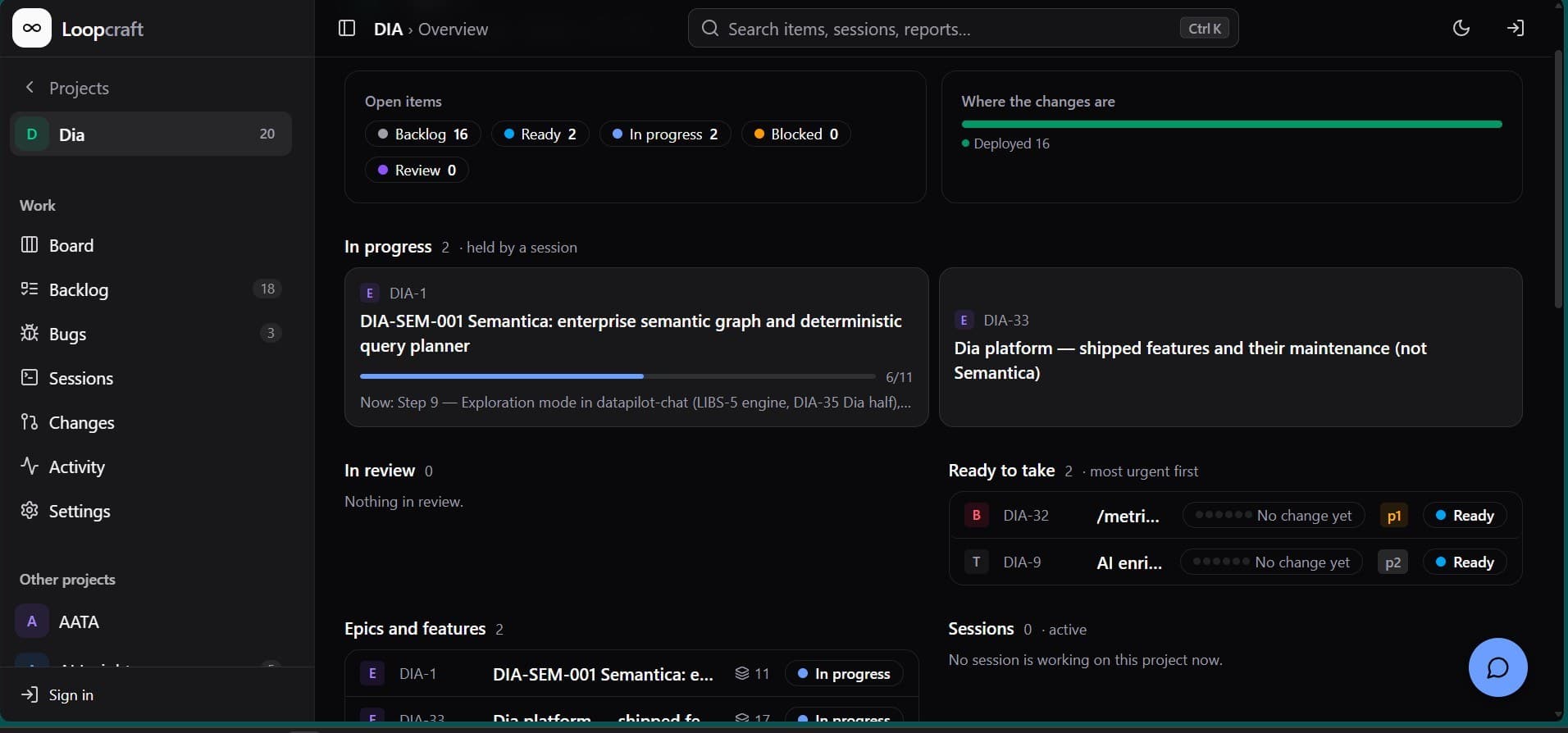
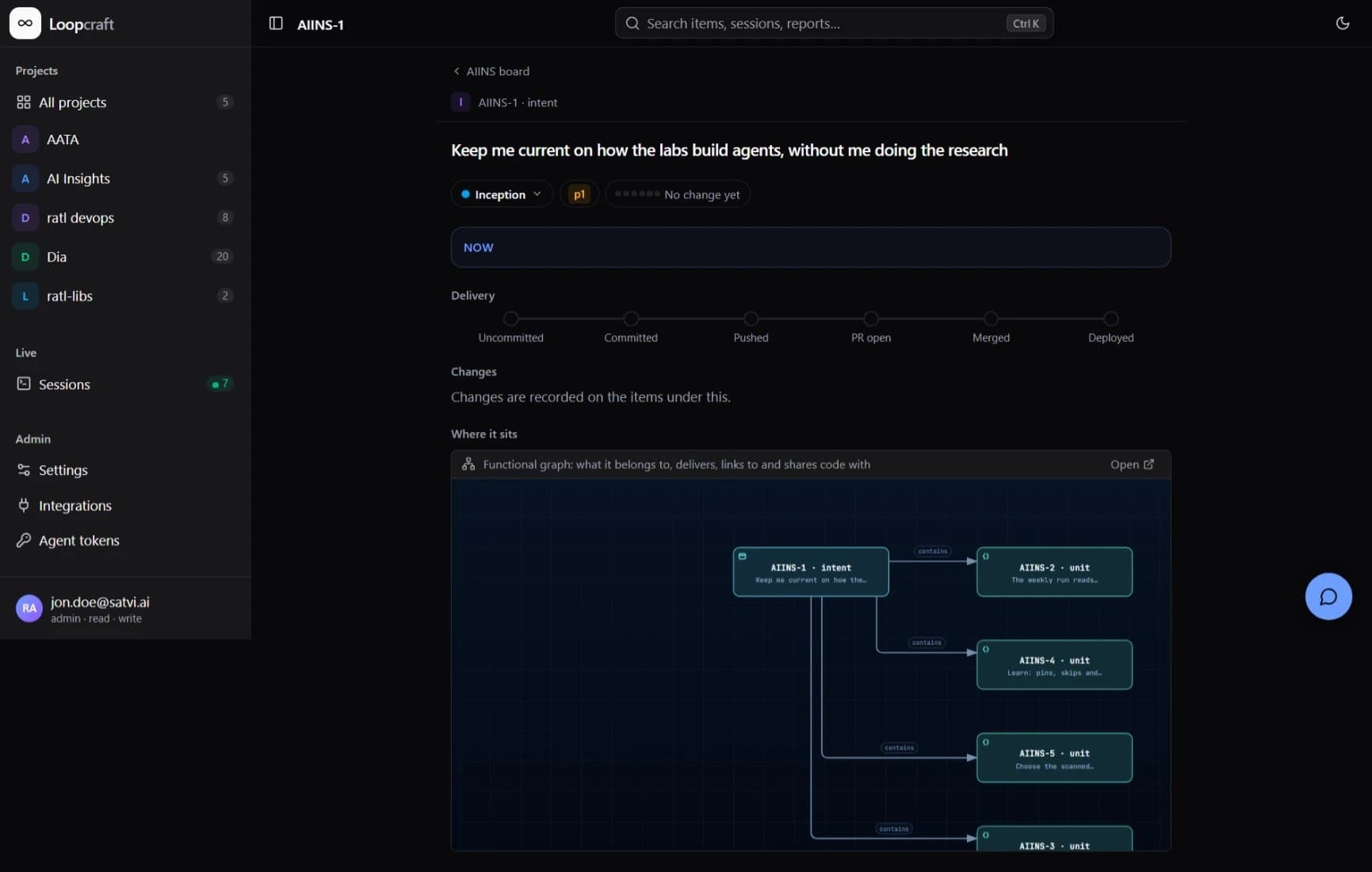
Delivery is tracked apart from status. Every item shows where its change is, uncommitted, committed, pushed, in a pull request, merged or deployed, and the pull request, the CI result and the deployment move it along on their own once the GitHub App is connected. A merge gate on the pull request passes only when the item's record is complete.
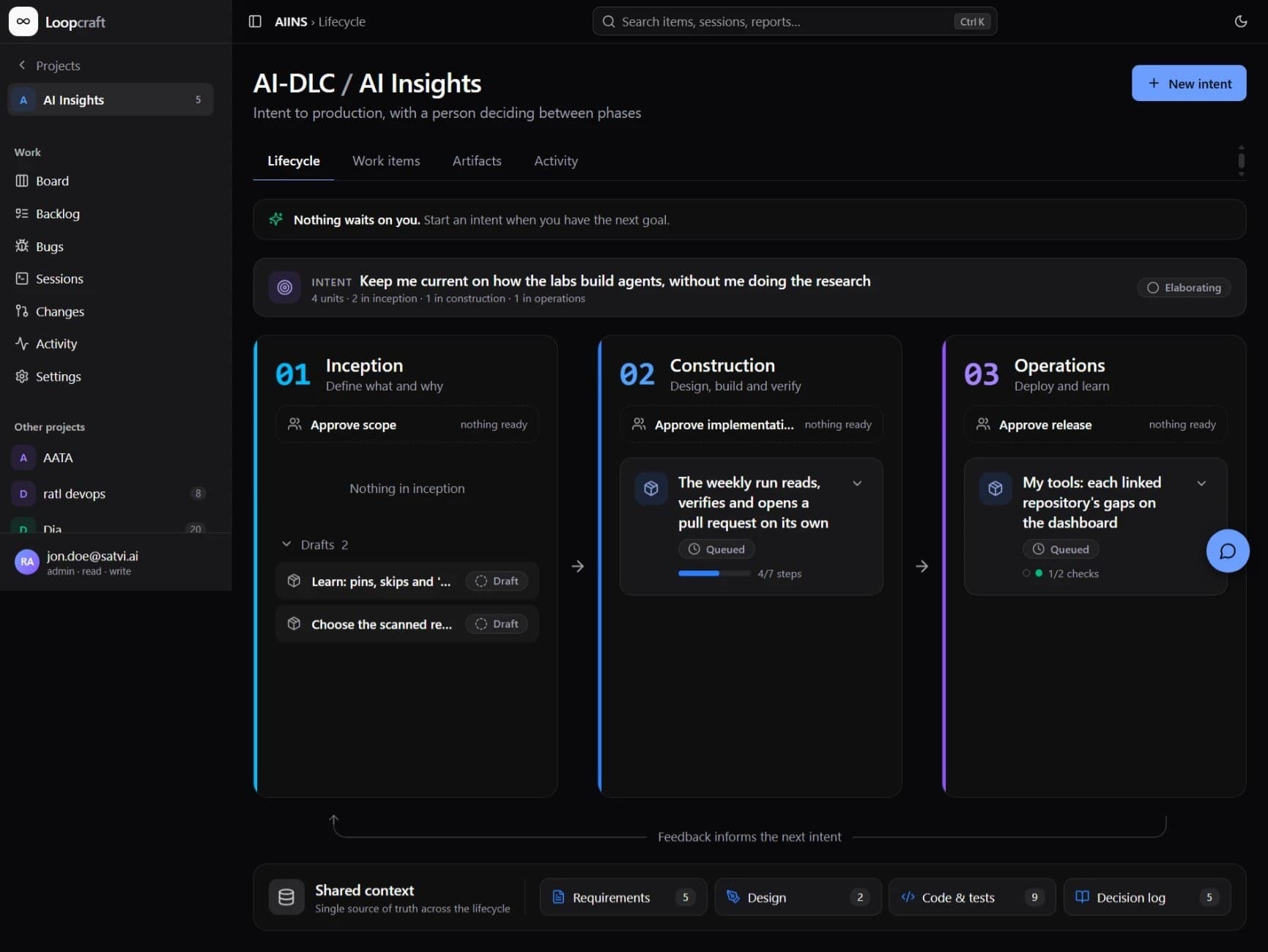
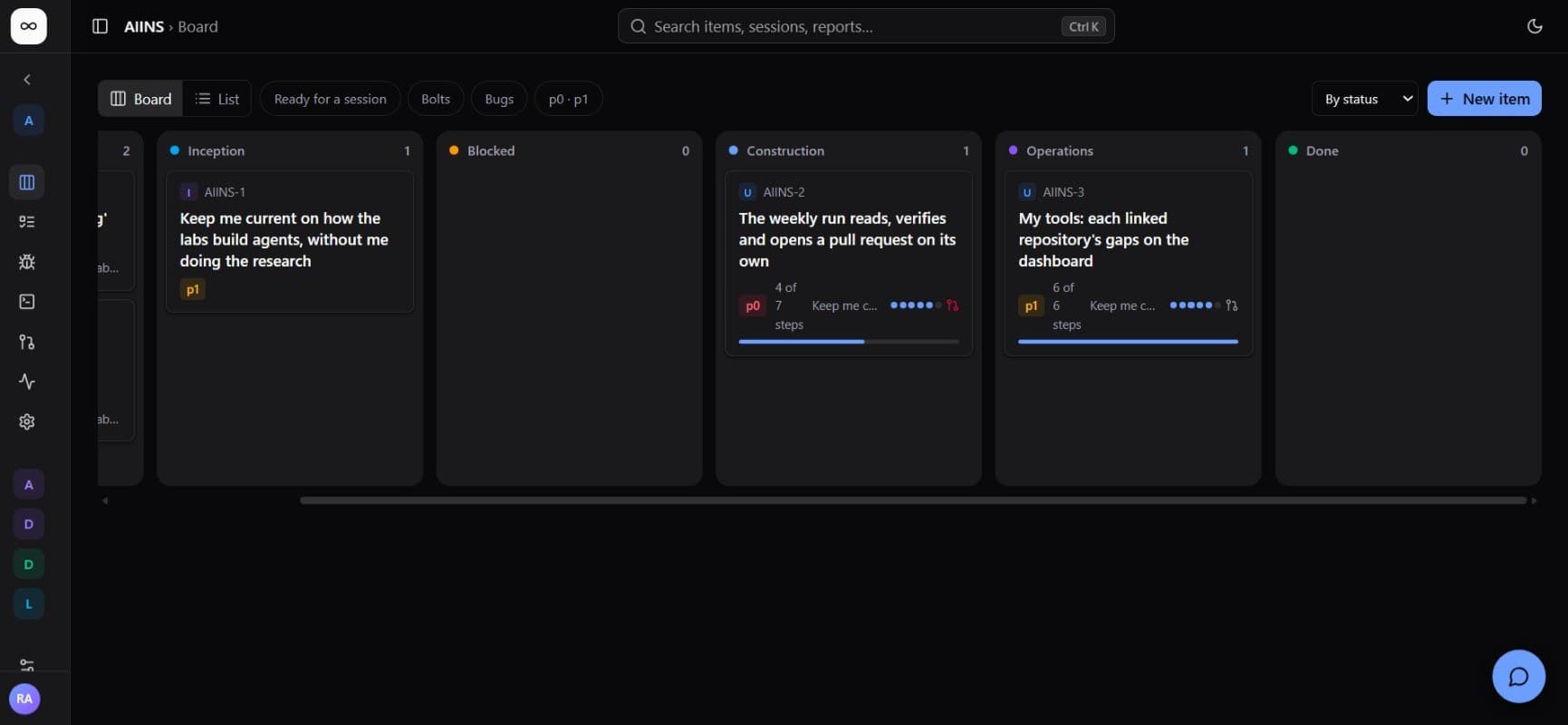
Each project runs the process it chooses. The built-in one takes an epic through features and stories to done, with a change record before anything closes. The AI-DLC profile takes an intent through inception, construction and operations, with a person deciding between phases. Switching a project's process maps every item across in one step and records the move.
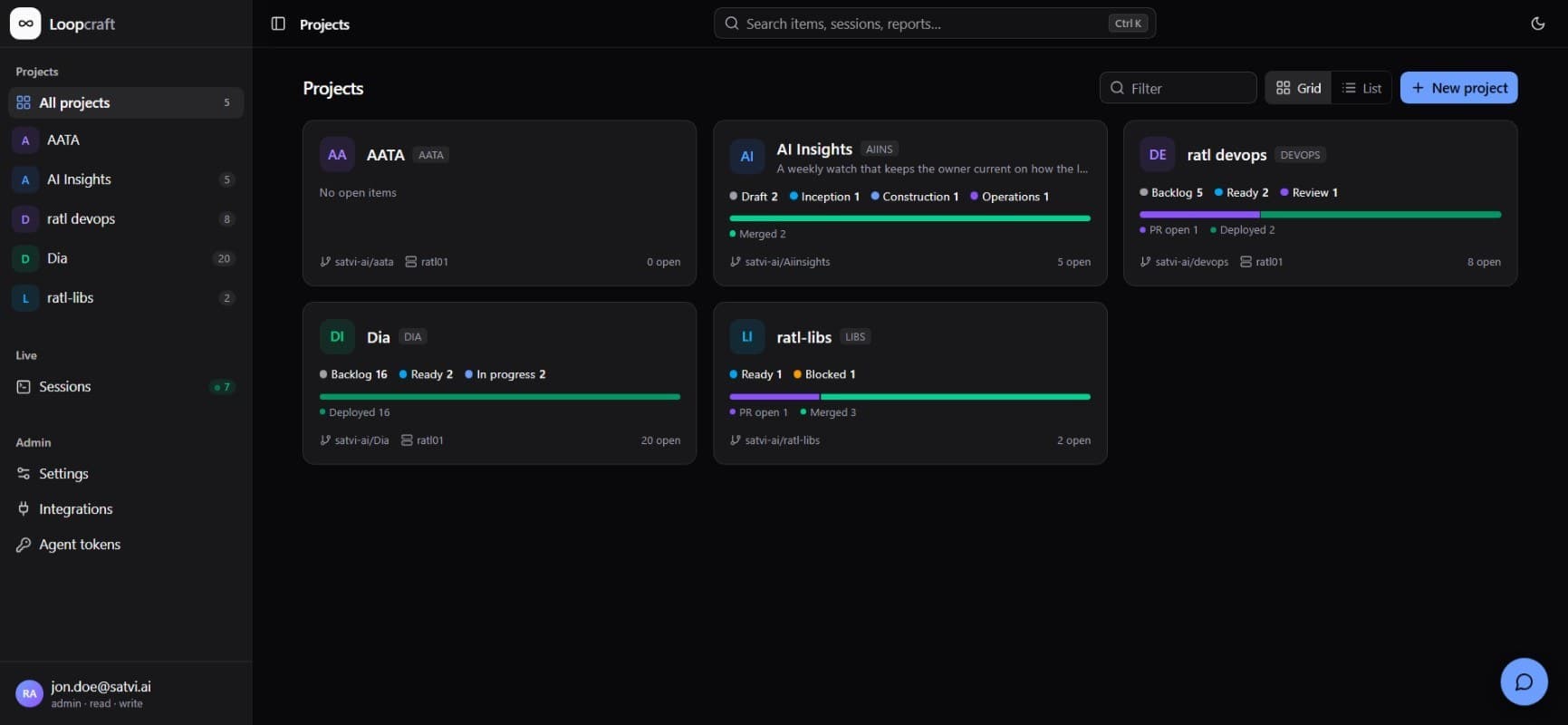
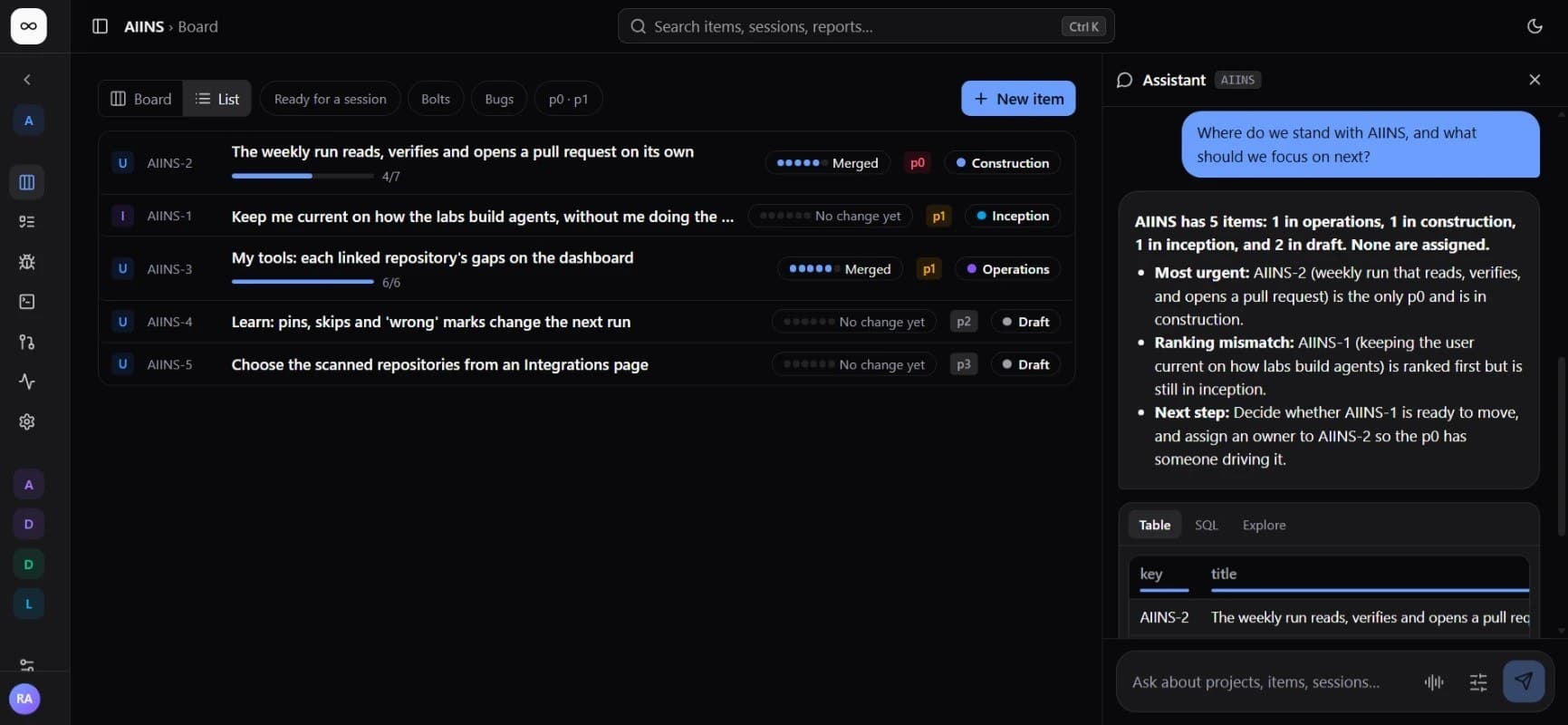
People read all of it on a board and in the item's own page: what is in progress and by whom, what waits on them, where the changes are, and a graph of where the item sits among the work it belongs to and delivers. Review findings become bugs with the file, the line and the failure they describe. Sessions show which machine, repository and branch each agent is on, live.
Ask Loopcraft a question in plain English, where do we stand and what should we focus on next, and the assistant answers from the live record, with the table and the SQL it used.
What we use it for
Every change to Dia, to our shared libraries and to Loopcraft itself goes through it. It is how we let agents write most of the code while a person still approves every plan and reviews every change, and how we can show, for any feature, the plan it came from and the tests behind it. People sign in with their Microsoft account; agents never sign in, they carry a token with the projects it may touch.